Publications

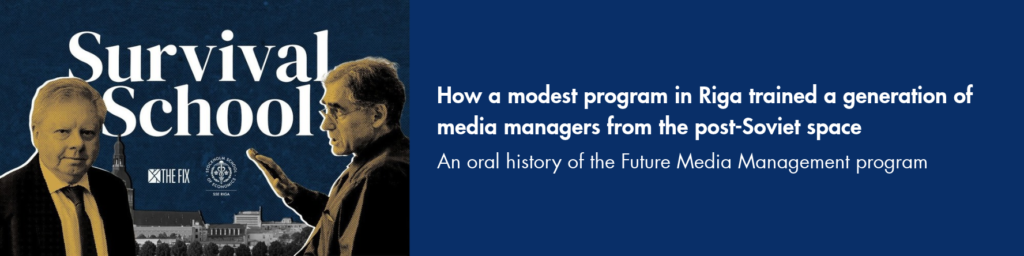
Natalja Tocelovska remembers walking into the classroom for the first time. The doors opened — and she saw people looking at her with caution, almost suspicion. She knew the previous finance teachers here had been met with resistance. They knew another person with spreadsheets had arrived.

“Both sides were afraid,” she says. It was 2019 — the program was three years old, and Tocelovska had just been brought in to teach the finance module, one of several lecturers on the team. Her background was in banking and academia: she had led the brokerage division at SEB Latvia, one of the largest banks in the Baltics, and had taught finance for years at SSE Riga — to students who had chosen the subject themselves. Executives with no finance background were still a recent audience for her: people who, the moment numbers appear, want to close their laptops, throw out the documents, or simply leave the room. And this audience was different still.

In the room sat editors-in-chief and directors of independent newsrooms from Belarus, Ukraine, Russia, Georgia, Armenia, and Central Asia. People who knew how to investigate corruption and publish news under censorship. For many of them, money or a business approach to running a newsroom was something they didn’t want to deal with. Something far removed from why they had entered the profession in the first place.

The program that brought them to this room is called Future Media Management. It operates within the Stockholm School of Economics in Riga, and this year marks its tenth anniversary. Over the past decade, more than three hundred media managers from over twenty countries have passed through it — editors, publishers, CEOs, newsroom directors who took on the task of running a business out of necessity: because there was no one else to do it. The Kyiv Independent, Suspilne, Hromadske, Meduza, Mediazona, Holod, Novaya Gazeta, the Belarusian Investigative Center — these are just a fraction of the senior media professionals who received MBA-level training within the walls of the building at Strēlnieku 4a. This article is about what happens when journalism meets management, why it is so difficult, and why it matters.

Read the full article: HERE

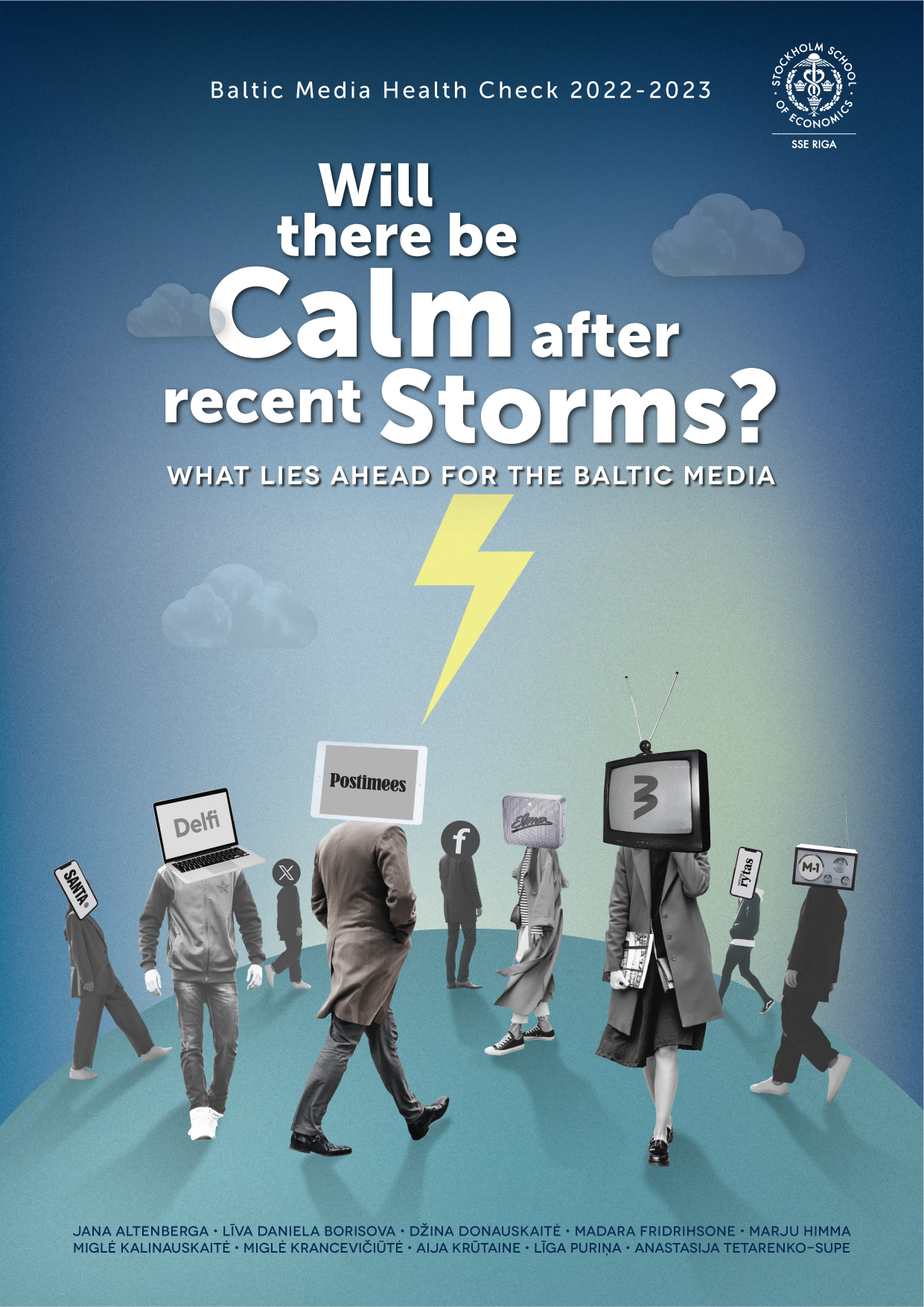
Baltic Media Health Check 2024–2025

The Baltic Media Health Check is an annual analytical overview of the media industry in Latvia, Lithuania, and Estonia. It examines key trends, financial performance, audience dynamics, policy developments, and the challenges and opportunities facing media organisations in the region. The report is widely used by journalists, researchers, policymakers, and anyone interested in the media landscape of the Baltic states. 

Titled “Superpowers of the Baltic Media”, this year’s report explores how local media outlets are adapting to disruption and challenges, revealing that their key strengths lie in constant adaptation to change, resourceful operation on tight budgets, and sustained audience loyalty.

The publication tracks the shifting media landscape, offering a detailed analysis of audiences and revenue by breaking down the financial indicators of the most popular media outlets and their owners in 2024. Financial data shows that 27 of 37 companies owning the most popular media outlets operated with a net profit in 2024, a “very good result” compared to previous years.

Key topics and market insights covered in the report include:

  • Audience and Market Data: Comprehensive rankings of the TOP 5 TV Channels, Online Media Websites, Radio Stations, Newspapers, and Magazines in the Baltics. Audiences for most media brands have continued to decline, while the consolidation of the market continues.
  • An exploration of emerging trends and the strategies media companies in Latvia, Lithuania, and Estonia are employing to navigate today’s evolving landscape.
  • A follow-up on digital subscriptions across Estonia, Latvia, and Lithuania, addressing the question of how many digital subscribers the most popular Baltic media outlets currently have. 
  • The Pivot to Video: The Baltic Media Health Check analyzes whether video content can bring sufficient revenue to online news media.
  •  Journalist Burnout: An in-depth look at what is “Pushing Journalists Out of Newsrooms,” revealing that a growing number of newsroom workers are experiencing burnout, drained by heavy workloads and scarce resources.

The Baltic Media Health Check 2024–2025 is organized and supported by the Anne-Marie and Gustaf Ander Centre for Media Studies at the Stockholm School of Economics in Riga. We extend our special thanks to the Embassy of the Kingdom of the Netherlands in Latvia for their co-funding contribution to this publication.

Mistake correction: The CEO of UAB Verslo žinios has been Ugnius Jankauskas since 2010. We apologize for the error.


Baltic Media Health Check 2024 - 2025

To download the 2024-2025 report, please subscribe to our newsletter and be the first one to hear about our programmes, courses and scholarships.

Previous reports: Baltic Media Health Check

Availability of information when practising journalism in Latvia

Claim for withdrawal of news that insults one’s honour and respect: an overview of legal aspects and experience of journalists in Latvia

Community-Powered Journalism: A Manual for Sustainability and Growth in Independent News by Mark Lee Hunter & Kevin Davis

News Verification Guide

Legal Guides for Media in Estonia

Legal Guides for Media in Latvia

Legal Guides for Media in Lithuania